Free · English & Español
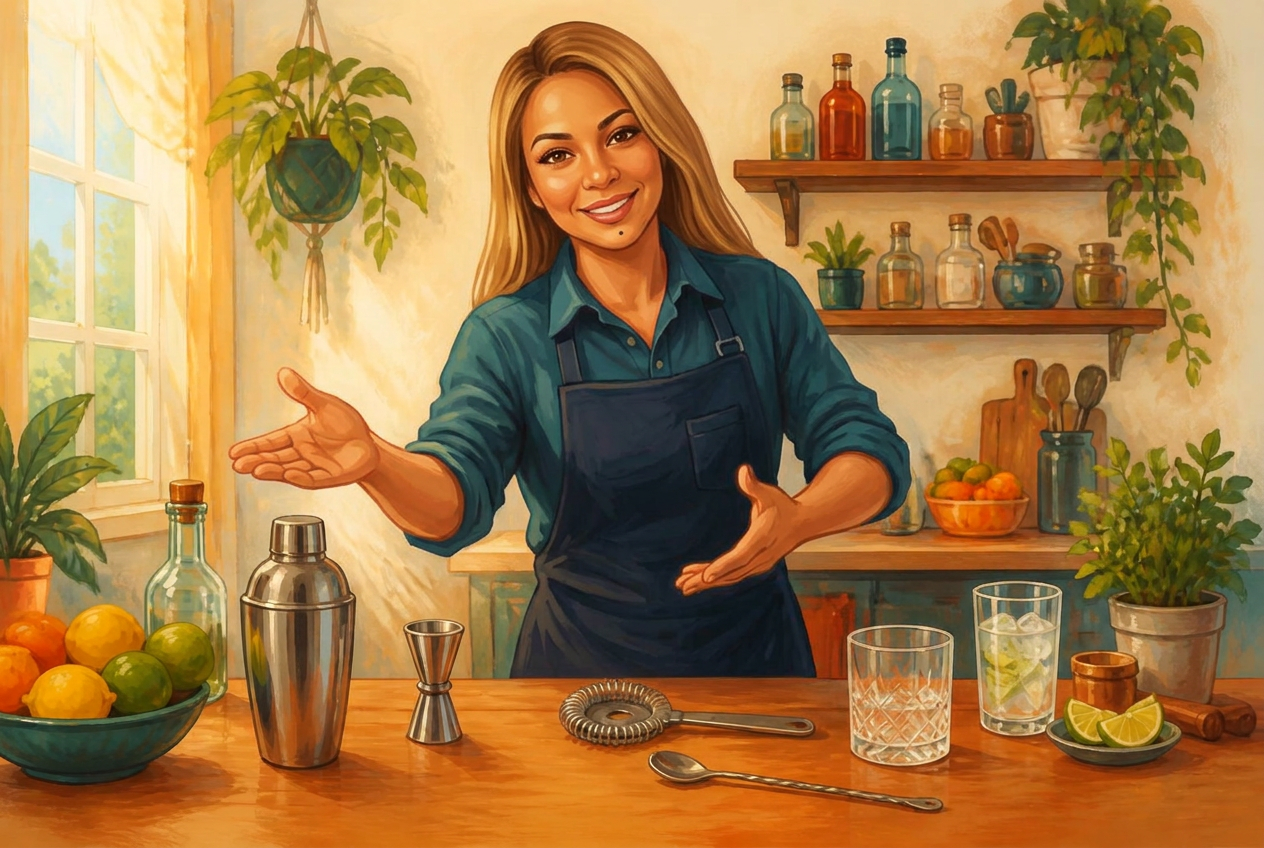
Learn Basic Bartending Skills at Home — Free
Start with simple tools, common drinks, customer service basics, and responsible alcohol service. Learn at your own pace with free resources in English and Spanish.
Beginner friendly • No experience required • Learn at your own pace
What You'll Learn
Six practical areas that build a strong beginner foundation.
Bar tools and glassware
Recognize a shaker, jigger, strainer, bar spoon and muddler, and learn which glass fits each drink.
Measurements and pours
Work with ounces and milliliters, pour consistently, and keep every drink balanced from the first try.
Classic drinks and simple recipes
Memorize a short list of classics you can build, stir or shake with confidence during a busy shift.
Garnishes, ice, and presentation
Cut clean citrus, choose the right ice, and serve drinks that look tidy and appetizing.
Customer service and communication
Greet guests warmly, confirm orders clearly, handle busy moments calmly and work well with your team.
Responsible alcohol service and hygiene
Keep your station clean, follow local alcohol laws, and recognize when the right answer is not to serve.
Bar Tools and Glassware
Look at each picture, say the name out loud, then find something similar in your kitchen.
Tools
Cocktail shaker
Chills and mixes drinks with citrus or juice. Fill with ice, shake hard for about 12 seconds.
Jigger
Your measuring cup. Two cones, two sizes — it keeps every drink tasting the same.
Strainer
Holds back ice, mint and seeds so only the smooth drink reaches the glass.
Bar spoon
Long and thin for stirring gently in a tall glass without losing the bubbles.
Muddler
Presses mint or fruit to release flavor. Press and twist — never grind the leaves.
Bottle opener
Simple but essential. Keep one within reach of your station at all times.
Glassware
Highball glass
Tall glass for drinks topped with soda or cola, such as a Gin and Tonic or Cuba Libre.
Rocks glass
Short and heavy, for spirits over ice or short built drinks.
Coupe glass
Shallow bowl on a stem for shaken drinks served without ice, like a Daiquiri.
Martini glass
V-shaped and stemmed. Hold the stem so your hand does not warm the drink.
Measurements and Pours
Measuring is what makes a drink taste the same every single time.
- 0.5 oz15 ml
Syrups and small accents
- 0.75 oz22 ml
Fresh lime or lemon juice
- 1 oz30 ml
Liqueurs and second spirits
- 1.5 oz45 ml
The most common single pour
- 2 oz60 ml
A strong or double pour
Quick memory trick
1 oz = 30 ml. Half of that is 15 ml, and the standard single pour, 1.5 oz, is 45 ml. Everything else is built from those three numbers.
Guests come back for the drink they remember. A jigger — not your eye — is what makes that possible. Practice by measuring water into a glass until the amounts feel familiar in your hand.
Five Classic Drinks
Learn these five and you can handle most beginner orders. Practice each one without alcohol first.
Gin and Tonic
Glass: Highball glass · Build over ice
You need
- 2 oz gin (60 ml)
- Tonic water to top
- Ice
How to make it
Fill the glass with ice, pour the gin, top gently with tonic, stir once.
Garnish: Lime wedge
Cuba Libre
Glass: Highball glass · Build over ice
You need
- 2 oz white rum (60 ml)
- Cola to top
- Squeeze of fresh lime
How to make it
Ice the glass, add rum and lime, top with cola, stir once from the bottom.
Garnish: Lime wedge
Mojito
Glass: Highball glass · Muddle, add ice, top and stir
You need
- 2 oz white rum (60 ml)
- 0.75 oz lime juice (22 ml)
- 0.5 oz simple syrup (15 ml)
- Mint leaves + soda water
How to make it
Press mint gently with lime and syrup, add rum and crushed ice, top with soda, stir up.
Garnish: Mint sprig
Margarita
Glass: Coupe or rocks glass · Shake and strain
You need
- 2 oz tequila (60 ml)
- 1 oz orange liqueur (30 ml)
- 0.75 oz lime juice (22 ml)
How to make it
Shake hard with ice, strain into the glass. Salt half the rim so guests can choose.
Garnish: Lime wheel, salted rim
Daiquiri
Glass: Coupe glass · Shake and strain
You need
- 2 oz white rum (60 ml)
- 1 oz lime juice (30 ml)
- 0.75 oz simple syrup (22 ml)
How to make it
Shake with plenty of ice until very cold, strain into a chilled coupe. No ice in the glass.
Garnish: Thin lime wheel
Swap the spirit for soda water or juice while you practice. The technique is exactly the same.
Garnishes, Ice, and Presentation
The last ten seconds of a drink are what the guest sees first.
Lime wedge
Cut in six. Slit the flesh so it sits on the rim.
Lime wheel
A thin round slice. Looks clean floating or on the rim.
Lemon twist
Peel, squeeze it over the drink for aroma, then drop it in.
Mint sprig
Slap it once in your palm to wake up the smell.
Ice cubes
Melt slowly. Use for built drinks in tall glasses.
Crushed ice
Chills fast and dilutes fast. Perfect for a Mojito.
Wipe the glass, keep fingers off the rim, and serve on a clean surface. Tidy always looks professional.
Start With the Basics
Work through these six steps in order. Each one is short and practical.
- 1
Learn the names of common tools: shaker, jigger, strainer, bar spoon, muddler, bottle opener.
- 2
Learn standard measurements: ounce, half-ounce, milliliter, and how to use a jigger.
- 3
Practice safe, clean setup: wash hands, use clean ice, clean tools, and keep a tidy work area.
- 4
Learn five beginner drinks: Gin and Tonic, Cuba Libre, Mojito, Margarita, and Daiquiri.
- 5
Practice hospitality: greet customers, listen carefully, repeat orders, and communicate respectfully.
- 6
Learn responsible service: never serve alcohol to minors or visibly intoxicated people; follow all local laws and workplace rules.
Important
Learning recipes is only one part of bartending. A good bartender also protects guests, follows local alcohol laws, keeps the station clean, and knows when not to serve.
Simple Home Practice Kit
Nothing expensive. Most of it is probably already in your kitchen.
- Measuring jigger
- Cocktail shaker or a clean jar with a secure lid
- Long spoon
- Citrus juicer Optional
- Strainer
- Cutting board and small knife
- Ice tray
- Non-alcoholic mixers such as soda water, cola, tonic water, juices, lime, and simple syrup
- Notebook or phone notes for recipes and feedback Optional
You can practice shaking, stirring, measuring, garnishing, and presentation with non-alcoholic ingredients. You do not need alcohol to learn the core techniques.
4-Week Beginner Practice Plan
A calm, realistic pace. Repeat any week as many times as you need.
- Week 1
Tools, measurements, and setup
Learn tool names, glassware, basic measurements, sanitation, and organized bar setup. Practice measuring water with a jigger.
- Week 2
Techniques
Practice shaking, stirring, building a drink in the glass, straining, using ice correctly, and making simple garnishes.
- Week 3
Five classic beginner drinks
Learn the ingredient lists and techniques for a Gin and Tonic, Cuba Libre, Mojito, Margarita, and Daiquiri. Practice with non-alcoholic versions if needed.
- Week 4
Service practice
Practice taking an order, repeating it back, preparing one or two drinks efficiently, keeping your area clean, and speaking with confidence.
Print the Practice Workbook
8 pages · print or save as PDF · free
Free Courses and Learning Links
Independent providers. We are not affiliated with any of them.
- Spanish • Free
Provider: Fundación Carlos Slim — Capacítate para el Empleo
Free Bartender Course
A free Spanish-language course for beginners covering drink preparation, customer service, hygiene, and workplace skills. The course is structured in four levels with lessons, videos, infographics, activities, and evaluations.
Visit Free Course - Spanish • Free access
Provider: Edutin Academy
Free Bartender Course
A self-paced online course covering bartender fundamentals, bar tools, spirits, preparation techniques, cocktails, juices, and customer service. Course access is free; check the provider's site for certificate options and terms.
Visit Edutin - Spanish • Free access
Provider: Edutin Academy
Free Cocktail Course
Learn the foundations of preparing and creating cocktails. A useful companion course for practicing recipes, preparation methods, and presentation.
Explore Cocktail Course - Free program • Availability varies
Provider: Bacardi — Shake Your Future
Professional Bartending Training
A free professional bartending training program in selected locations. Availability, eligibility, language, and application dates can vary, so review the official program page before applying.
Check Program Availability
Before registering, check the official course page for current availability, language options, location requirements, certificate terms, and any costs that may apply to optional certificates.
Before You Apply
A short readiness check — not a requirement list from any employer.
- Learn at least 5–10 common drink recipes.
- Know basic bar tools and measurements.
- Practice a clean and organized workstation.
- Be ready to discuss customer service and teamwork.
- Understand that legal minimum-age requirements and alcohol-service rules vary by location.
- Ask an employer what training, permits, and availability they require.
Formal requirements vary by city, country, and employer. This page is educational information, not legal advice, and it does not offer certification or promise employment.
Ready to Ask About a Bartending Job?
You do not need to know every drink before you ask about a role. Many bars train beginners. What managers notice first is a willingness to learn, reliability, warm customer service, and real respect for responsible alcohol service. Take your time, ask politely, and keep practicing either way.
Sample message
Hi, I'm interested in learning more about bartending opportunities. I have started studying the basics of bar tools, common drinks, customer service, and responsible alcohol service. I am dependable, willing to learn, and happy to complete any training the job requires. Is there an opportunity to apply or train for an entry-level bartending position?